Dublin, Ireland, Friday 30th, 2026
Precious Metals, Halloween and How Ireland’s Samhain Was the Forerunner of Halloween
The Irish can legitimately claim Halloween as theirs. The festival didn’t originate in America; it was exported there by the Gaelic Irish and Scots who arrived on waves from the 1600s onward, carrying Samhain traditions that had originated thousands of years ago in Celtic Samnos.
Why Samhain is the Celtic and Gaelic Irish New Year
The Gaelic Irish and the Celts measured time differently. The day began at sunset, not sunrise. The day and year began in darkness, not light.
Samhain falls at the midpoint between the autumn equinox and the winter solstice — one of the four “cross-quarter” days that divided the Celtic calendar. The Pleiades, the Seven Sisters, rise at sunset around Samhain and were watched as a celestial marker of the turning year.
The Celtic year had two halves: the light half running from Beltaine (May) to Samhain, and the dark half from Samhain to Beltaine. Samhain was the threshold — the death of the old year, the beginning of the new. The year, like the day, like our children ... are born from darkness ... which should not be feared.
This made perfect sense to a pastoral people who lived in the moment and were more in tune with nature, cycles and seasons. The harvest was gathered, the cattle brought in from summer pastures, the weaker animals slaughtered before winter. The land was going into hibernation and the cycle of death. And from that death, the new cycle would be reborn.
What Survived from Samhain
The Holy Roman Empire’s Strategy
Pope Gregory III, of the Gregorian calendar, (731–741) moved All Saints’ Day from May 13th to November 1st. Pope Gregory IV (827–844) extended it to the whole Western Church. The timing was almost certainly deliberate — the same strategy used by the Roman Church for Christmas (absorbing the winter solstice festivals) and Easter (absorbing spring fertility rites).
The Roman Church didn’t eliminate Samhain — it tried to "baptise" and commandeer it. The folk practices continued underneath the Roman Church calendar.
Stingy Jack and the Jack-o’-Lantern
The jack-o’-lantern itself comes from the Irish legend of Stingy Jack — a trickster who twice outsmarted the Devil, only to find himself barred from both Heaven and Hell. Condemned to wander the darkness forever, Jack carved out a turnip, placed a burning coal inside, and roamed the night. Irish emigrants carried this tale to America, where pumpkins — larger and easier to carve — replaced the turnip.
Samhain is not “like” Halloween or “similar to” Halloween. Samhain is Halloween — the same festival, renamed, Christianised or "Roman Churchified", exported to America, and then commercialised and elements of fear and horror creep in.
Yet, Samhain is unbroken in its core elements for over two thousand years.
Halloween and the Metals
At Samhain, the last night of the old year and the first day of the Celtic New Year, the báirín breac or barmbrack cake held hidden objects that could tell your fortune in the year ahead. Delicious fruity cake - the traditional Irish sweet, spiced fruit loaf - with lashings of butter if you were lucky!
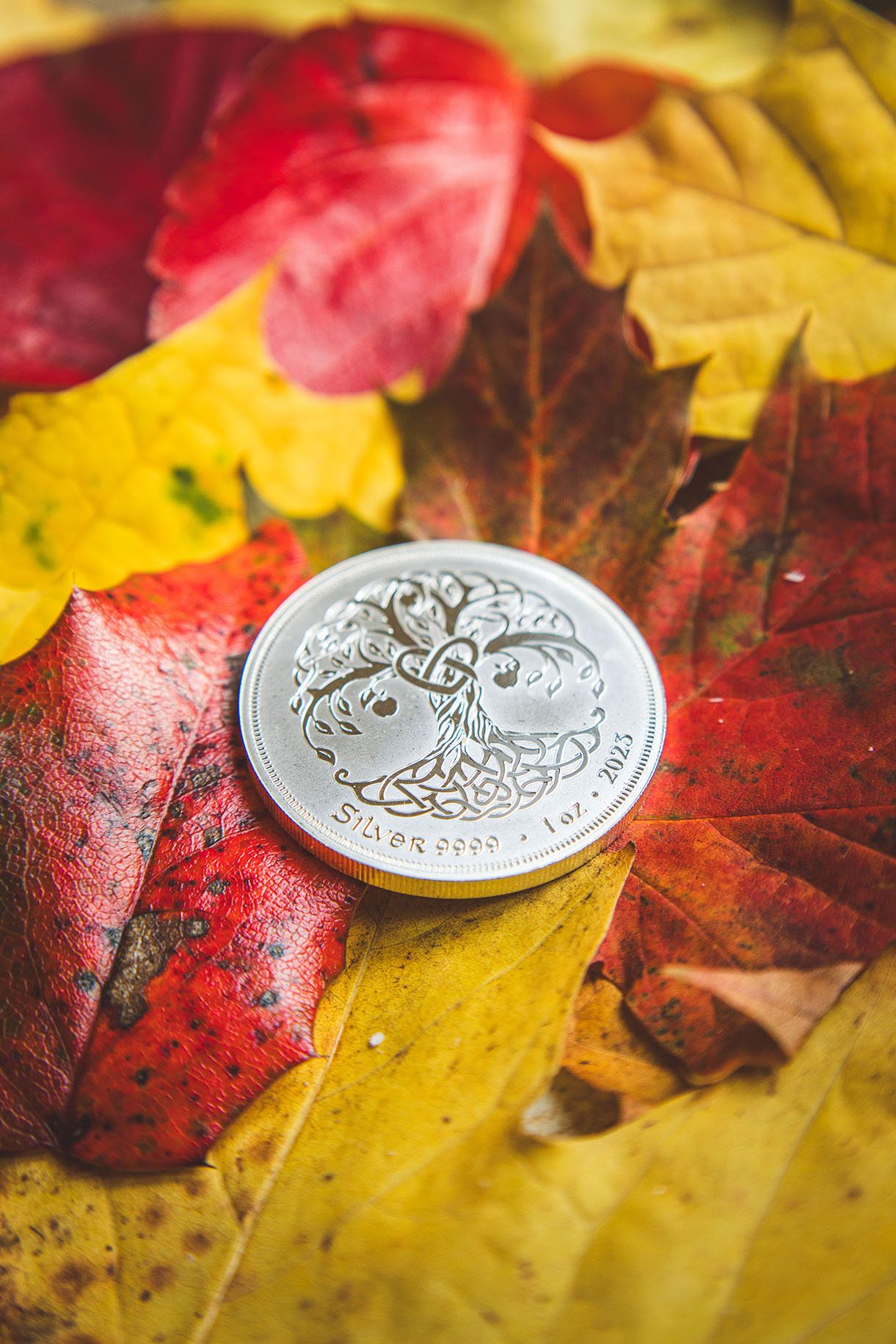
The person who found the silver coin hidden in the cake would be blessed with wealth and good fortune in the coming year. The silver ring foretold marriage; the coin foretold prosperity. Both were traditionally silver — airgead geal, the bright metal of the moon, associated with luck, protection against evil and purity.
Silver for Protection
Silver coins were placed into the hands of newborns to bring prosperity and ward off harm and illness. At Samhain, when the veil between worlds - material and spiritual - thinned and the Sí or fairy folk walked freely, silver and iron offered a layer of protection.
Iron, in particular, was feared by the Sí. Horseshoes were nailed above doorways. Iron nails were carried in pockets. The smith — the worker of iron, copper, silver and gold — held a unique status in Irish society. Under Brehon law, the smiths were the only craftsmen permitted to remain seated in the presence of a king.
The divine smith Goibniu forged the weapons of the Tuatha Dé Danann, while his partner Credne worked the silver — including the famous silver arm of King Nuada, Nuada Airgetlám. Metalwork was not mere craft; it was sacred.The silver ring and silver coin in the barmbrack cake foretold luck, fortune, and safe passage through the dark turning of the year.
Gold for Offering
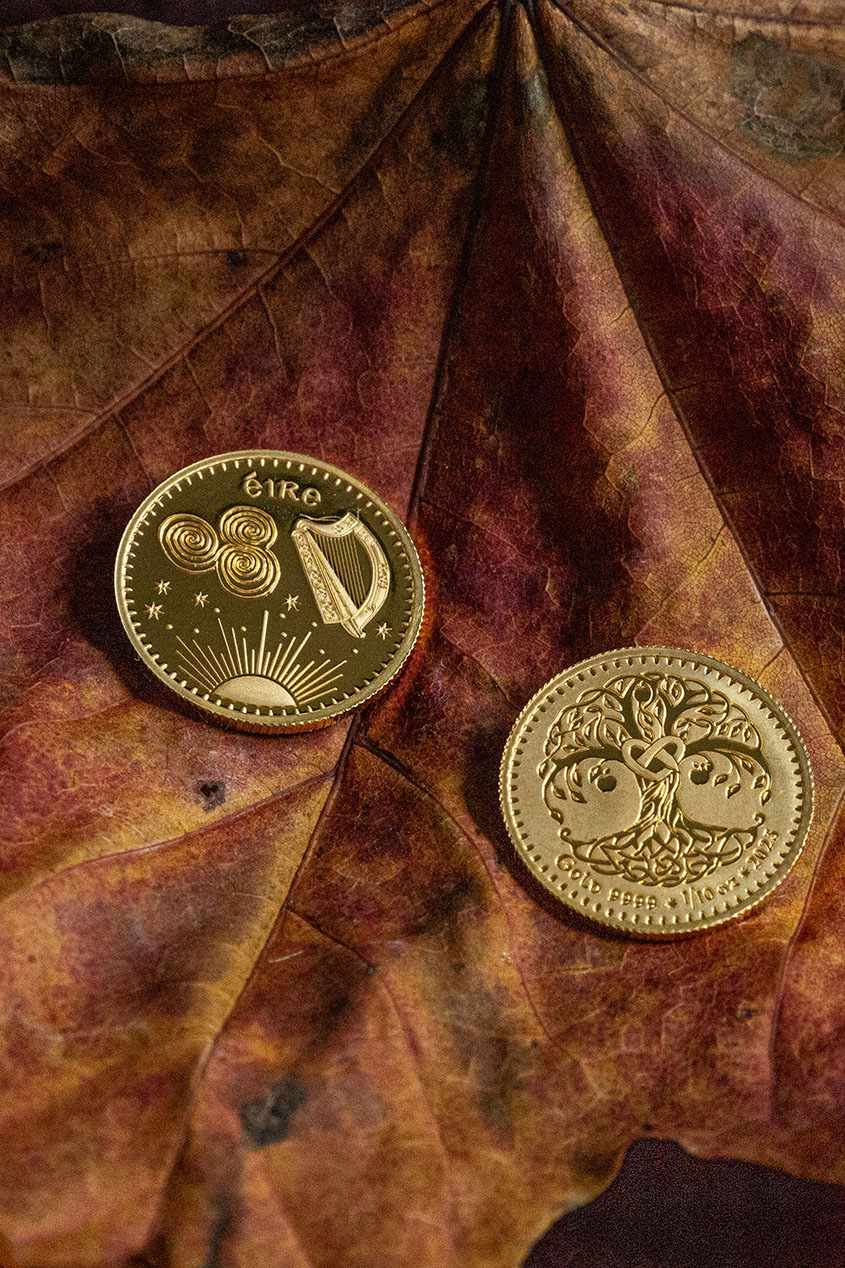
Gold served a different purpose — not protection, but offerings of grá and gratitude.
Ireland’s great Bronze Age gold hoards were deposited in bogs, lakes, and sacred waters. Frequently as a way to hide them from enemies, but also as offerings to the Goddesses and Gods of the land and water to bring good fortune in the year ahead.
At Samhain, when the boundary between the living and the dead dissolved, gold — airgead buí or ór — was given to the Gods, the ancestors, and the Spirits.
Samhain was also a feasting time before the dark, cold months — and the bronze or copper cauldron would have been the heart of that feast. The prosperity of the land and the waters and the abundance of the harvest and bountiful food was celebrated by all.
Conclusion
At Samhain, the precious metals had their role — and the coin or ring in the Irish barmbrack cake this week carries that ancient tradition forward.
Halloween started in Celtic Europe and was preserved in Gaelic Ireland. The celebration of the harvest, the grátitude to our ancestors, the spirits and souls, the mystic thin veil between worlds — all of it traces back to Samhain, the Celtic New Year. And on that night, metals mattered: silver for fortune and protection, gold as sacred offerings to the gods and goddesses of the land.
The Irish have kept more of the true meaning, the fun and the games and celebrate Halloween more joyously than anyone else.
Oíche Shamhna shona daoibh— Happy Samhain Night and Happy and Abundant Gaelic New Year!

Harcourt Centre, Block 4 Harcourt Rd, Saint Kevin's, Dublin, D02 HW77
© All rights reserved Tara Gold and Silver Limited.
2026 Tara Gold and Silver Limited trading as Tara Coins, registered in Ireland. Company number 679881, VAT no. IE3950811SH.

